
Everyday Shirts
Some shirts should feel like cloth, not like paper. Oxford and chambray at 120 to 140 GSM, woven dense enough that the collar stands on its own and the shoulder keeps its line. Take it as an OCBD, or open over a tee. Built shoulder-first rather than waist-first, which is the part of the body most size charts get wrong.
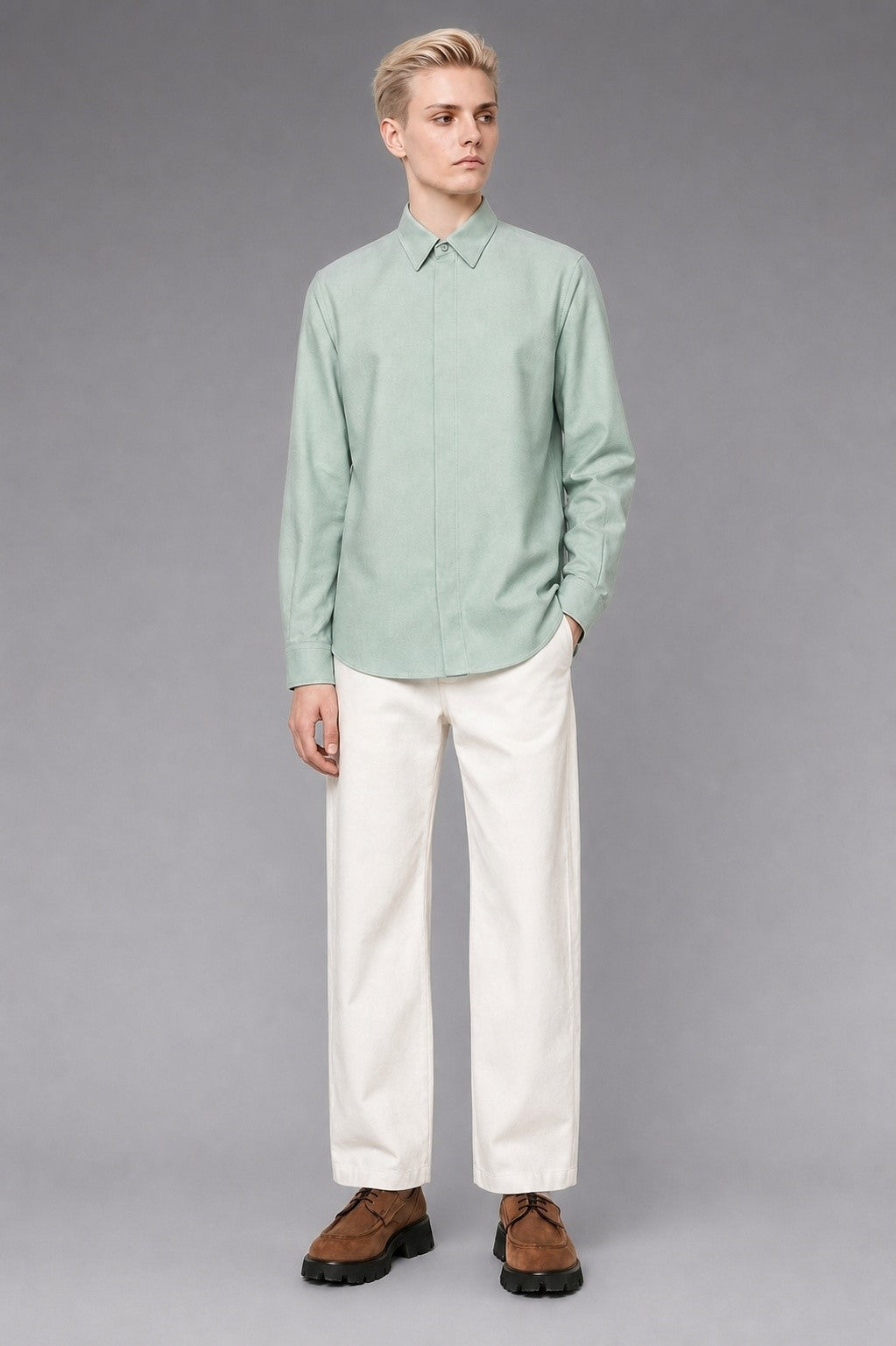
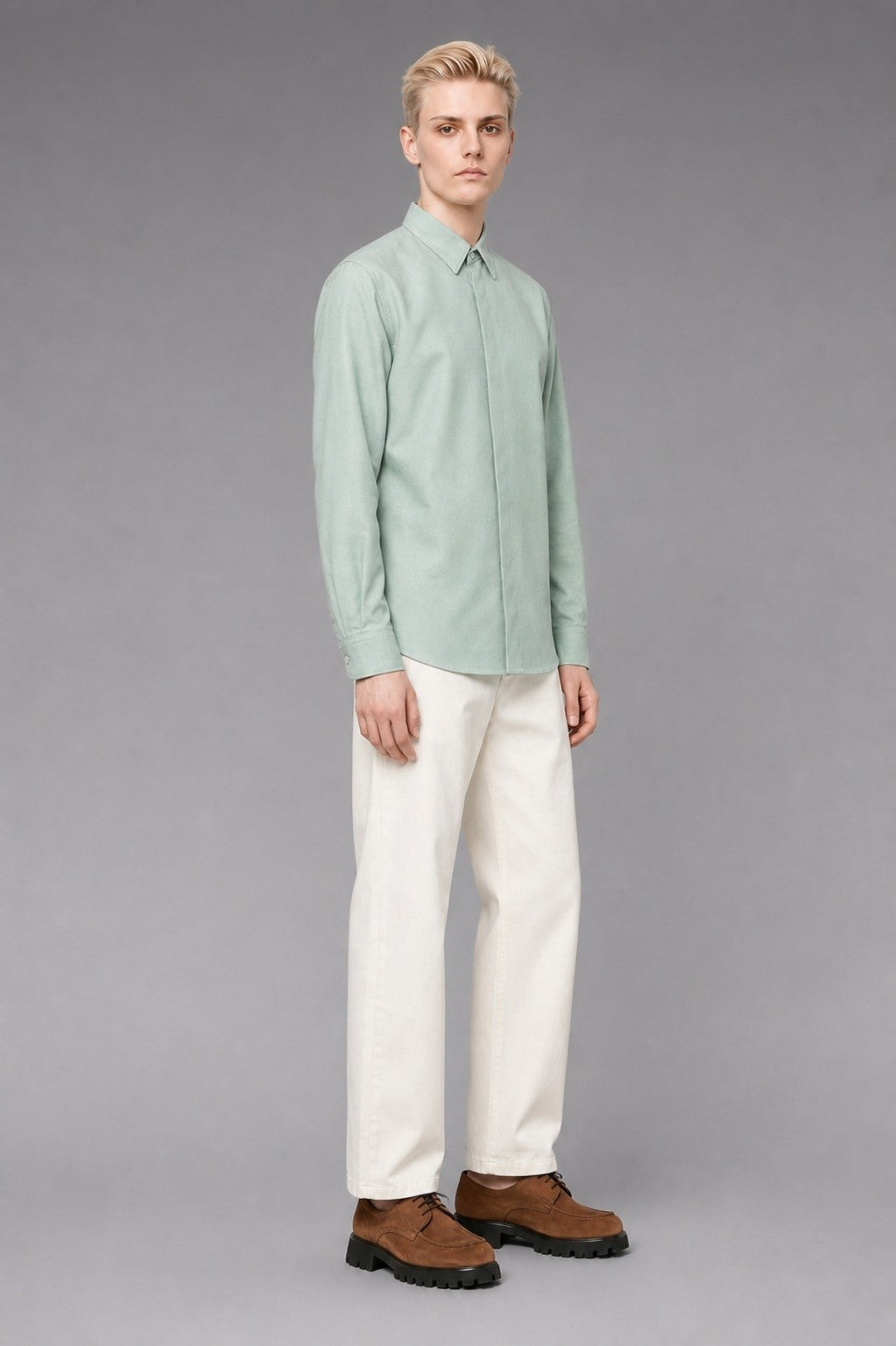
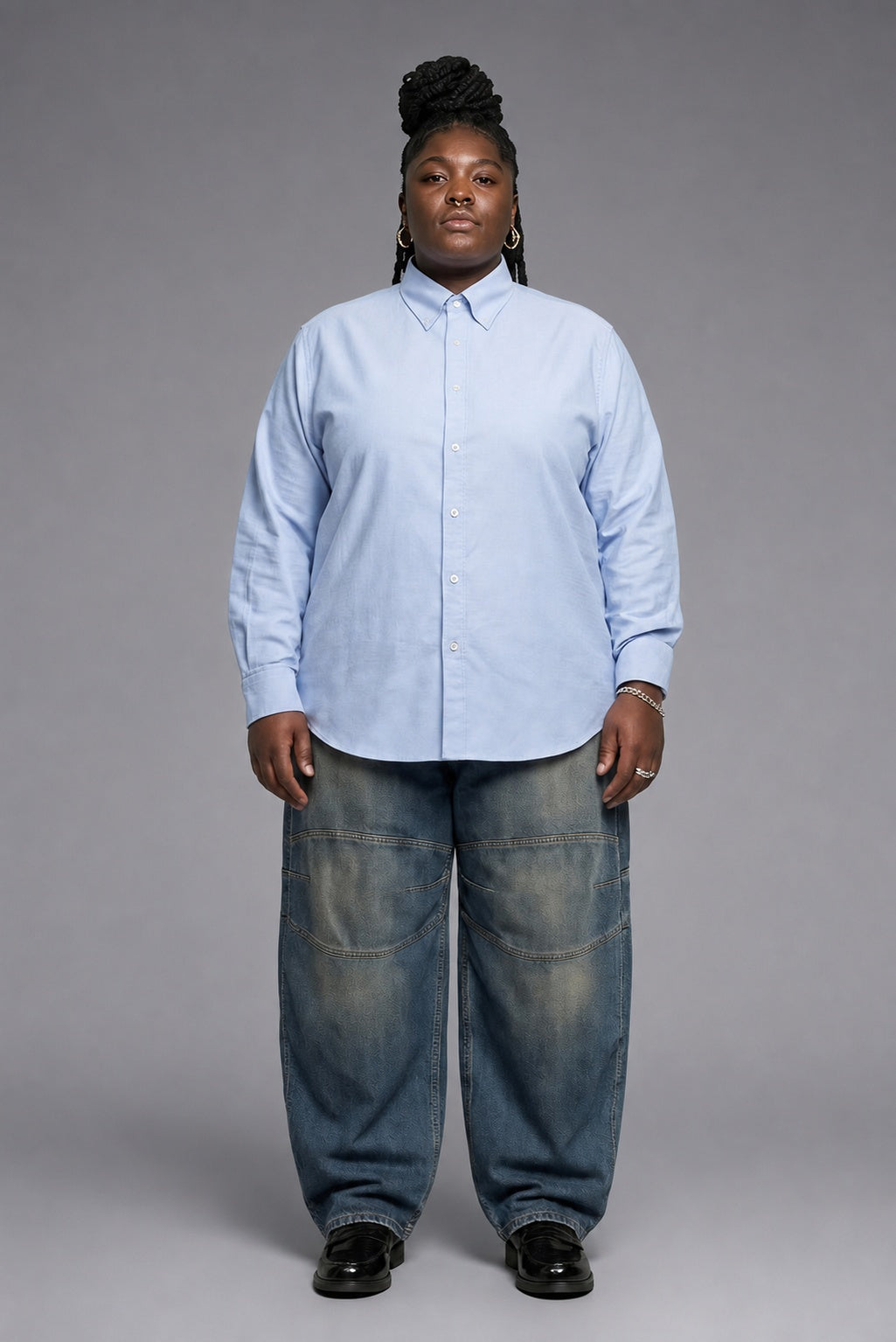
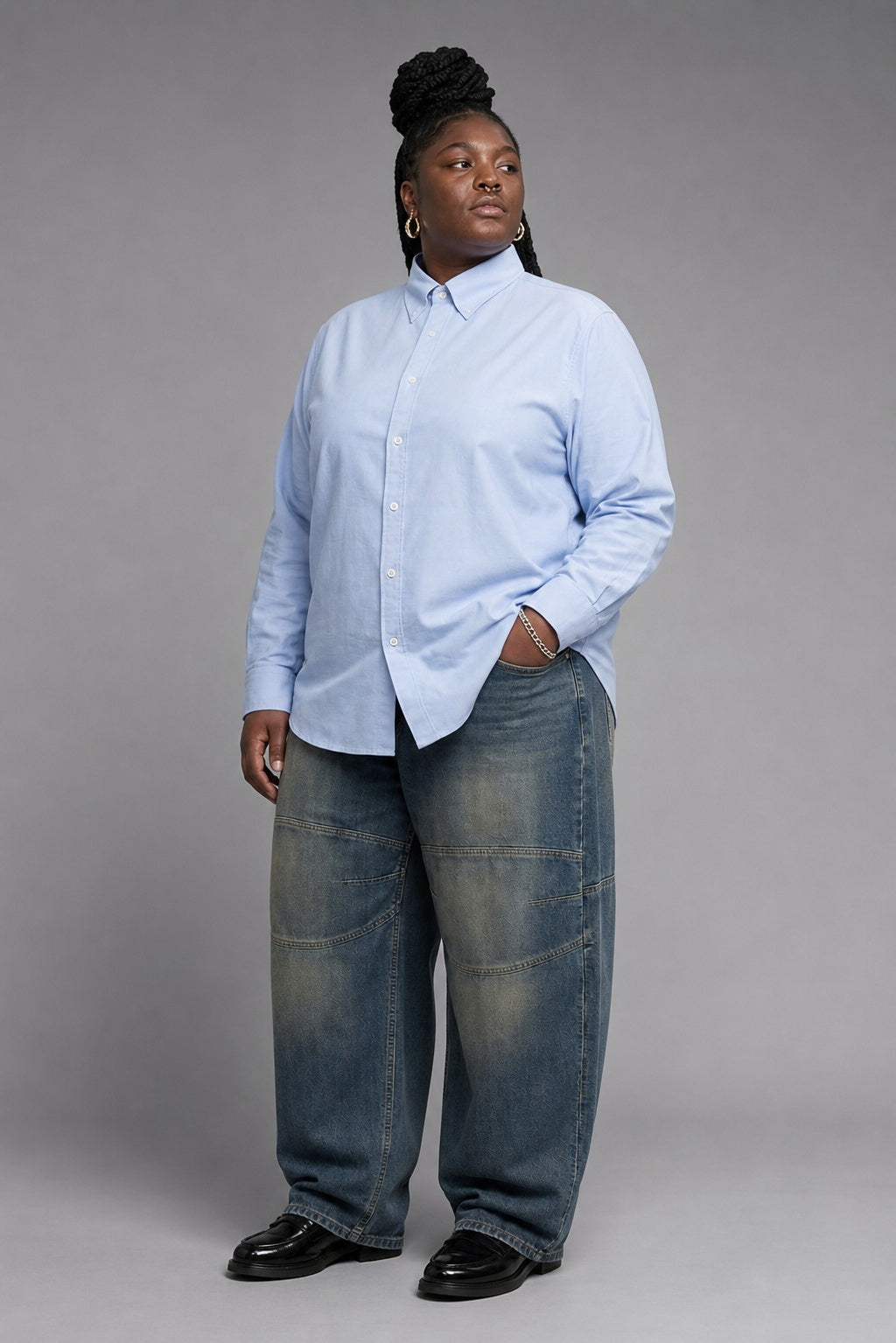
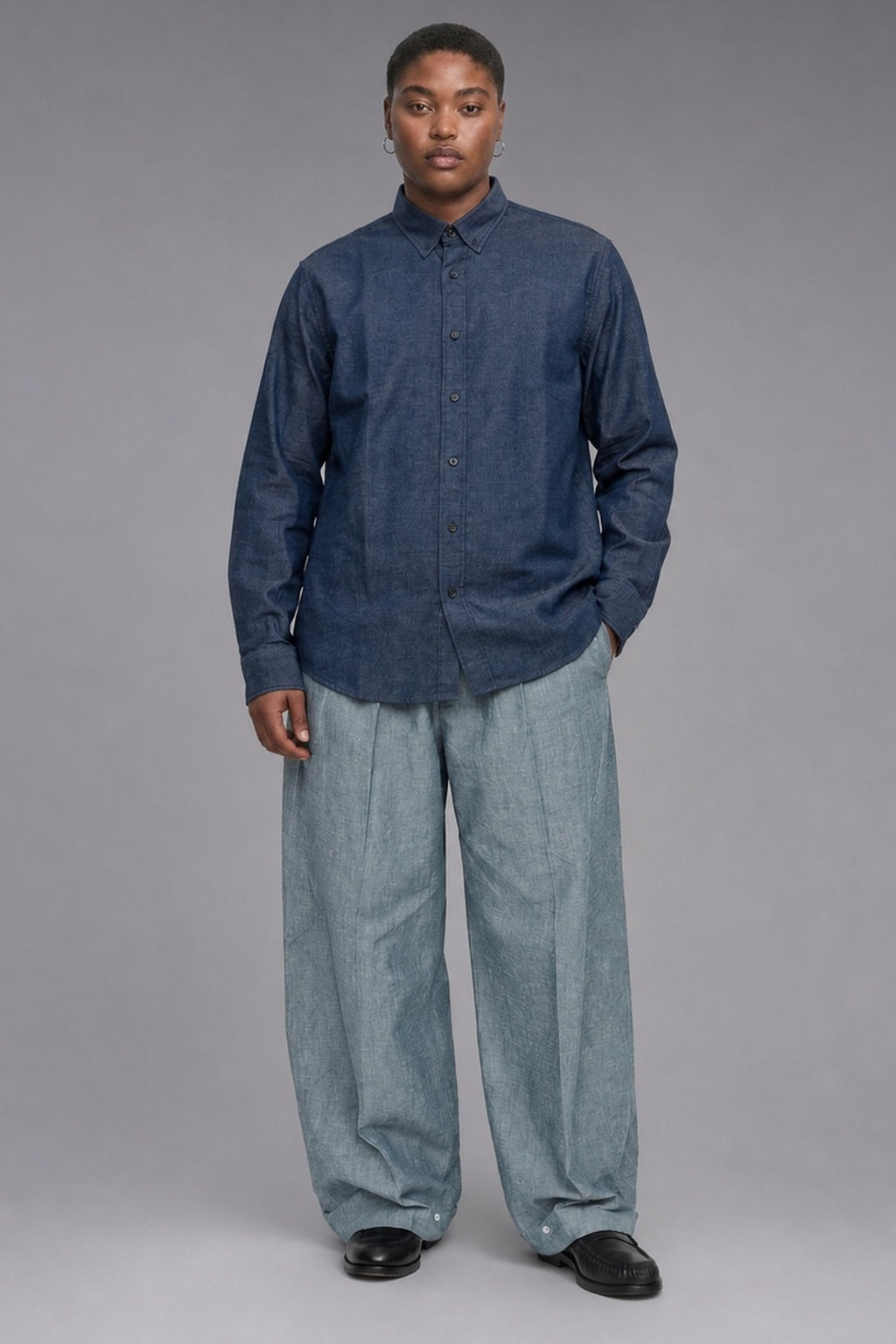
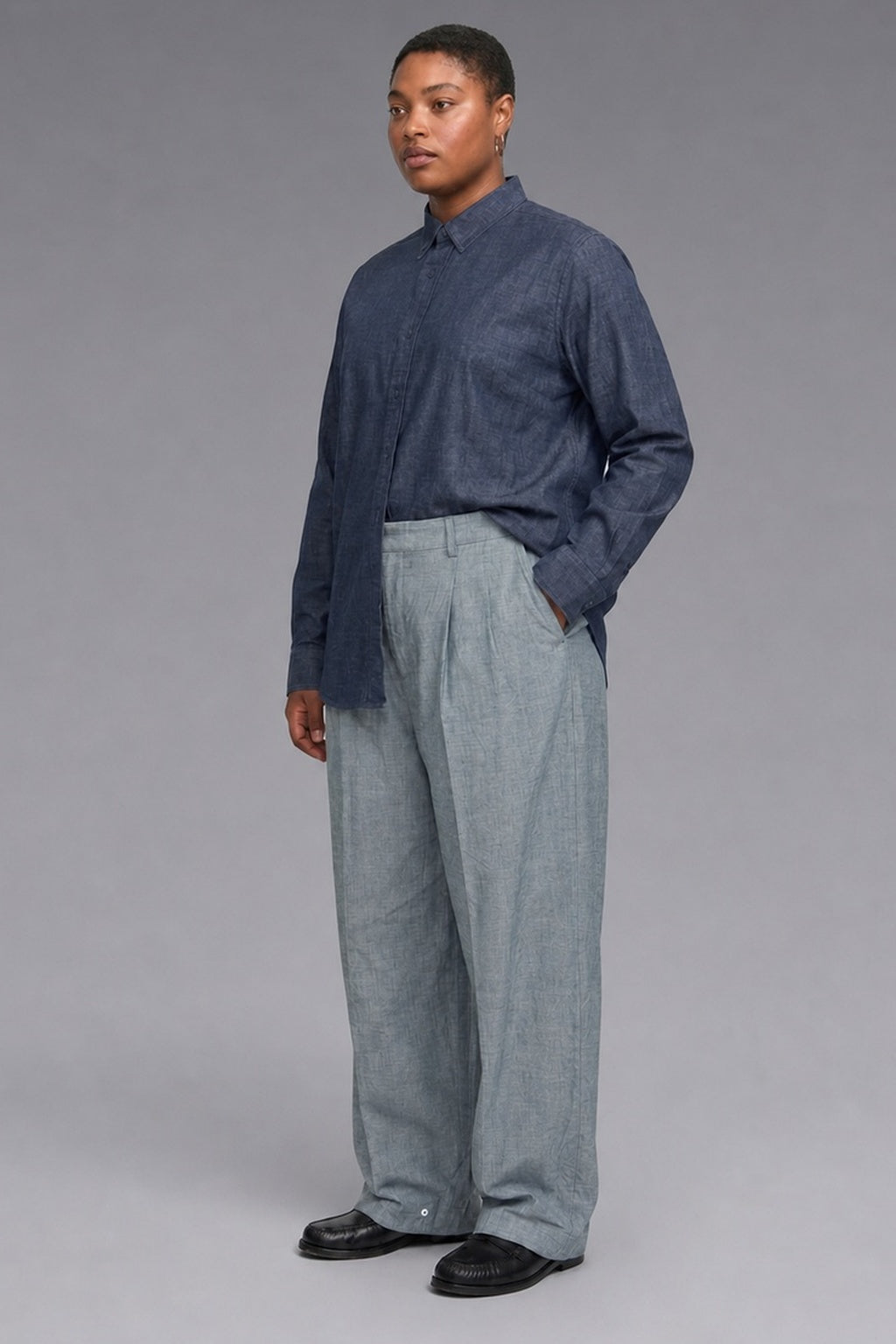
The oxford and chambray cloths in this group
Some shirts should feel like cloth, not like paper. This group is cotton with body — 120 to 140 GSM, woven dense enough that the collar stands on its own and the shirt keeps a line across the shoulder instead of collapsing into the armpit.
- Soft Oxford — 50/40 two-ply at 120 GSM. Washed before it reaches you, so day one feels like month six, but the collar still holds.
- Easy-Care Oxford — 40/40 at 140 GSM. As heavy as the chambray, with an easy-care finish so it comes off the line close to wearable.
- Chambray — 32/32 at 140 GSM. Denim's texture with a soft finish: the casual end of the group, and the one that ages best.
Oxford is a basket weave, which is why the surface has that faint grain and why it breathes better than its weight suggests. Chambray is a plain weave with a colored warp and white weft, which gives the flecked look without the stiffness of denim.
Every one is cut to your own shirt numbers or to our chart from 000 to 30, with the collar, cuff, placket, pocket and hem you choose.
Wearing these open over a tee most days? Go up one collar size and take the shorter hem. Dressing them for work? The high-count group is the step up in formality.
Every cloth we cut sits together on All Shirts.
Who it is for. The everyday end of the wardrobe, built on a body that is shoulder-first rather than waist-first. Oxford and chambray hold a collar without help, hide a chest that a fitted blouse would pull across, and take a loose cut without looking borrowed from someone larger.